Who Absorbs Duration Risk as Treasury Yields Climb Past 5%?
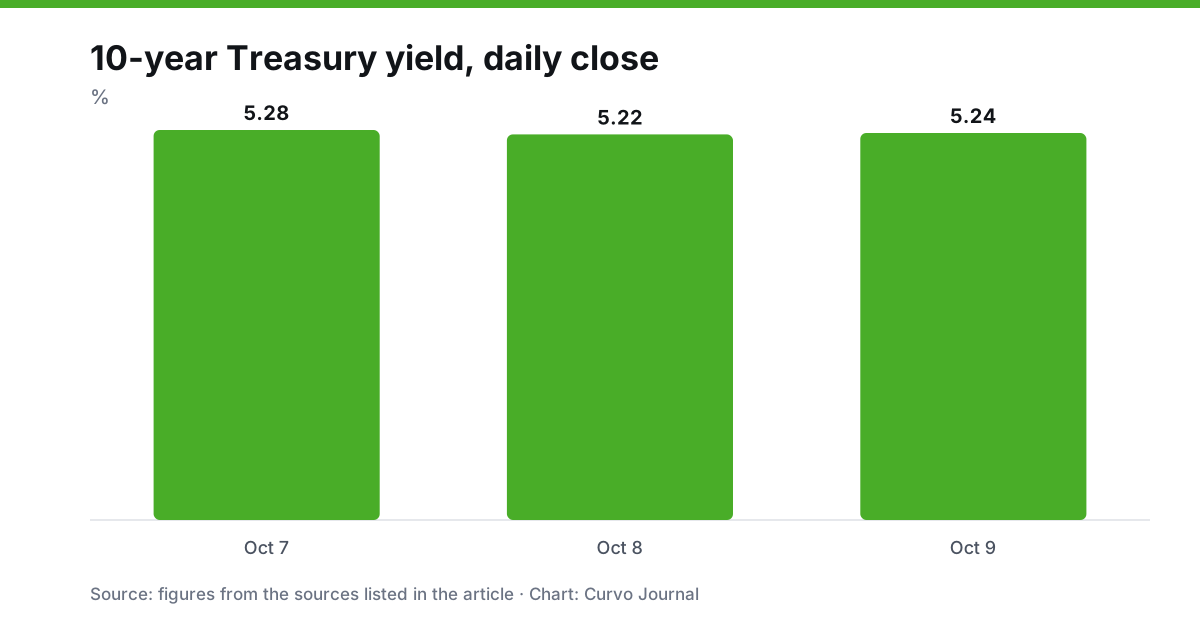
The 10-year Treasury yield rose 41 basis points in a month to 5.24%. Mortgage hedging and heavy issuance raise a question: who absorbs the duration risk?

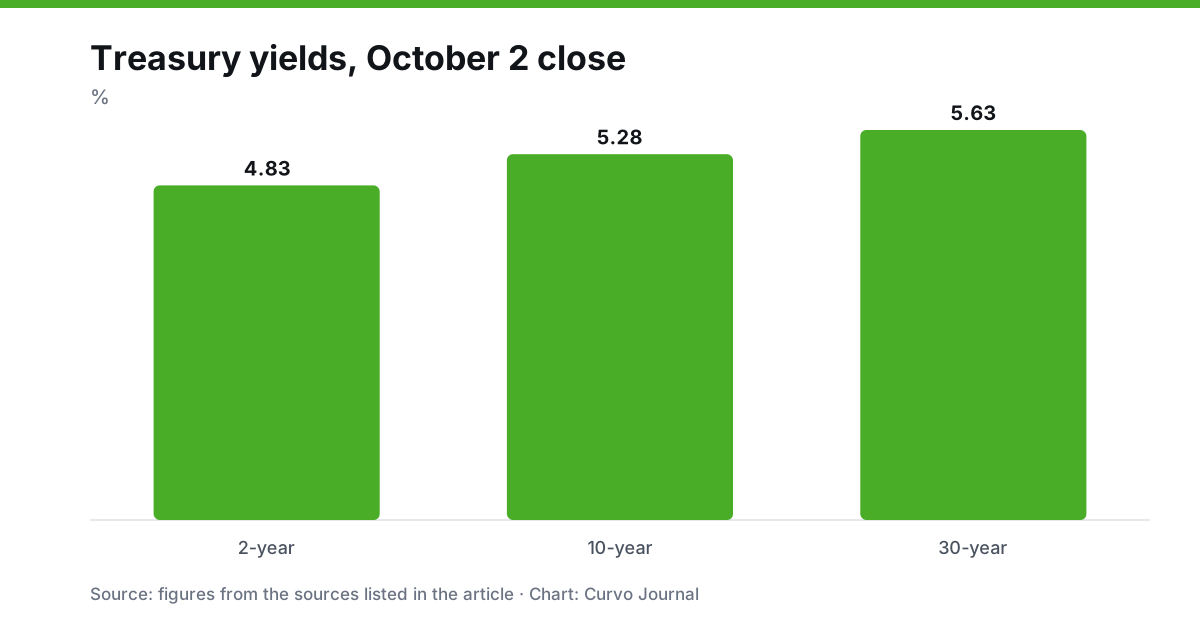
NEW YORK — The 10-year Treasury yield began this week at 5.24 percent, up 41 basis points from 4.83 percent on September 9, and the 30-year yield is near 5.60 percent. A rise of that size in a single month raises a question that matters as much as the level: when yields move this quickly, who ends up holding the duration risk?
Key takeaways
- The 10-year yield rose from 4.83 percent to 5.24 percent between September 9 and October 9.
- Reuters reporting cited by analyst Shiven Moodley points to rising options volatility, debt issuance tied to AI infrastructure and mortgage-related hedging as drivers of selling.
- Treasury auctions have drawn solid demand, which the analysis counts as evidence that investors are still absorbing duration.
- The Fed raised its target range to 3.75 to 4.00 percent in September, and its projections put the median rate at 4.1 percent by the end of 2026.
Mortgage hedging and the extension problem
Moodley’s argument starts with mortgages. When yields rise, homeowners refinance less, and the expected life of mortgage-backed securities extends. Investors who want to keep a target duration must then sell Treasuries or adjust swap positions to offset the longer exposure, which adds to upward pressure on yields. The mechanism, known as convexity hedging, tends to amplify a selloff once it starts.
Corporate issuance works in the same direction. Heavy borrowing, including debt tied to AI infrastructure investment, adds supply for investors to absorb and creates demand for duration hedges. Moodley also notes the corporate finance side: a 10-year yield above 5 percent raises the reference rate for long-term financing and the hurdle for capital-intensive projects.
The counterargument
The same analysis acknowledges that the evidence does not show forced liquidation is widespread, and it does not quantify how much convexity hedging contributed. There are signs that duration is still finding buyers. TreasuryDirect results show the $39 billion 10-year reopening on October 7 cleared at 5.300 percent with a bid-to-cover ratio of 2.77, and the $22 billion 30-year reopening on October 8 cleared at 5.618 percent with a ratio of 2.54. Treasury buybacks, the analysis adds, are a further support.
Falling volatility, less mortgage hedging or softer inflation expectations could also stabilize yields, Moodley says.
Why the Fed is part of the story
The Fed’s September decision to raise rates to 3.75 to 4.00 percent is the other pressure on duration. Its latest forecasts put the median policy rate at 4.1 percent by the end of 2026, with inflation expected to stay above target. Rate-sensitive buyers of long bonds have to weigh that path against the extra yield on offer at the long end. The 10-year now sits well above the midpoint of the policy range, which compensates investors for the risk that the Fed has more to do.
The supply side
Issuance is the other half of the equation. The Treasury’s coupon calendar over the past month shows how much duration the market has had to digest. After the September 9 and 10 sales of the 10-year ($39 billion) and the 30-year ($22 billion) reopenings, October brought the same sizes again, but at much higher yields: 5.300 percent for the 10-year and 5.618 percent for the 30-year, versus 4.834 percent and 5.308 percent in September. The bid-to-cover ratios held up, at 2.77 against 2.71 and 2.54 against 2.61.
Stable demand at higher yields is a sign of buyers entering as price falls, not of the market failing to clear. The question Moodley poses is whether that willingness persists if yields rise further or if hedging flows turn selling into a self-reinforcing cycle.
What to watch
Wednesday’s consumer price report is described as the first major test, followed on Thursday by producer prices and retail sales. A hot inflation reading would add to hedging flows and options volatility, while a soft one would lessen the pressure on mortgage-related selling. Readers should also watch the next refunding auctions, where the quality of demand will say more about who is absorbing the risk than any single day’s yield move.
Prepared with AI assistance from public sources and reviewed under our editorial policy. Not investment advice.