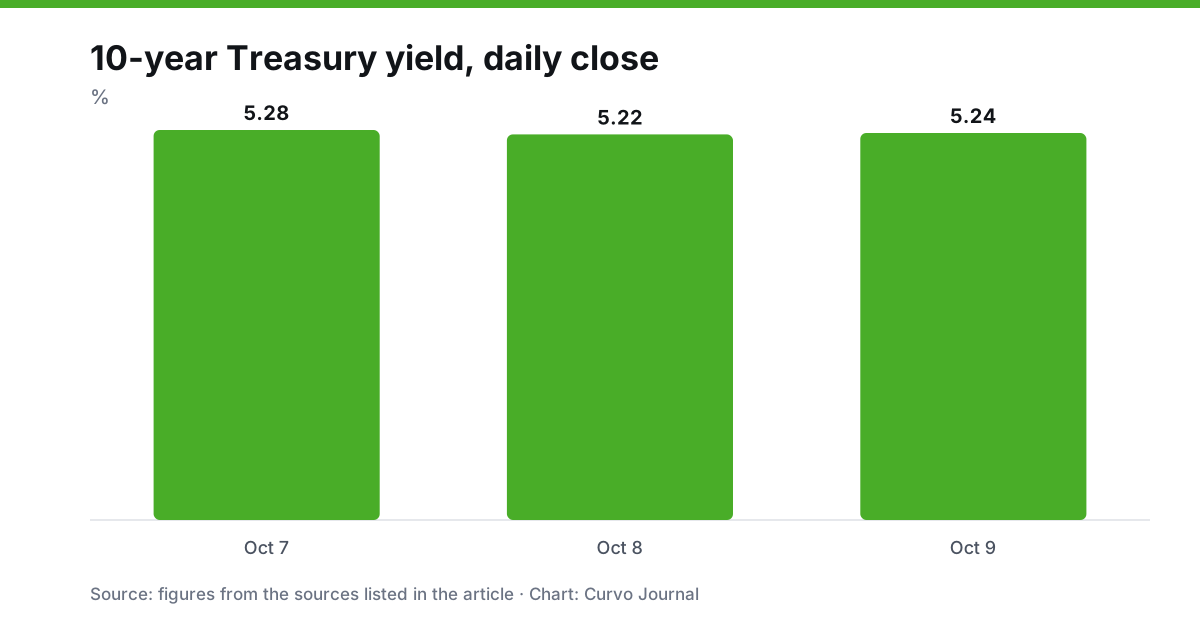
Fed Hike Odds Fade for October, but Treasury Yields Stay High
Futures put the odds of an October Fed hike at 22.1%, down from 64.2%, yet 2-, 10- and 30-year Treasury yields rose after a weak September jobs report.
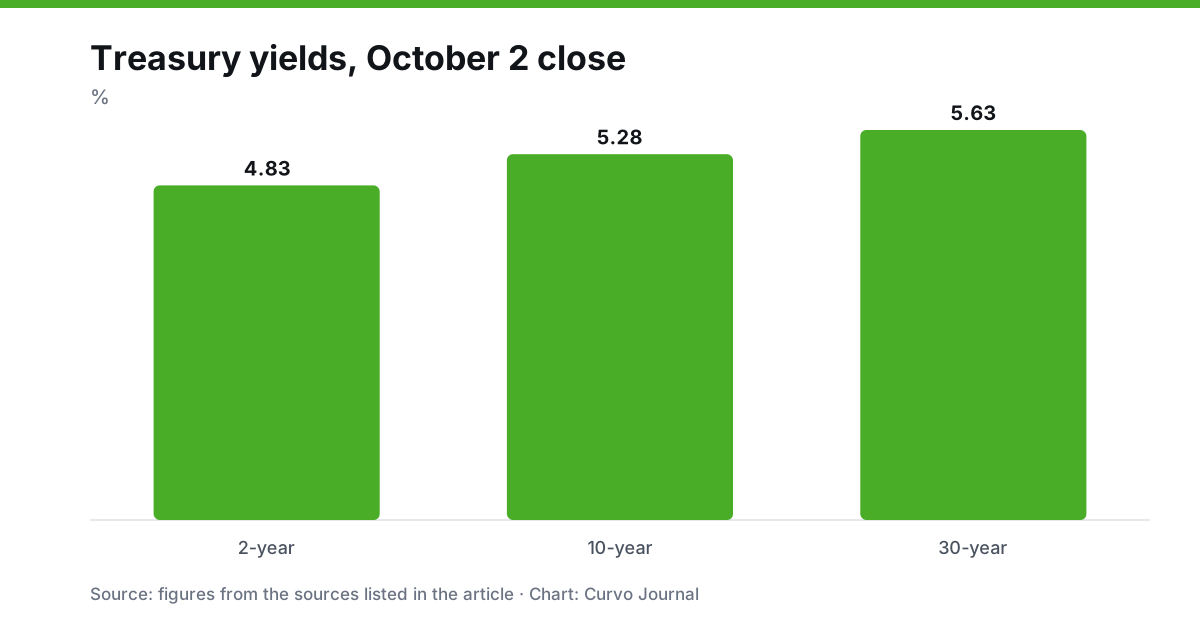
NEW YORK — Futures markets have pulled back sharply on the odds of a Federal Reserve rate increase later this month, yet Treasury yields have refused to follow. The probability of an October 28 hike has dropped to 22.1 percent from 64.2 percent in a little over a week, according to CME FedWatch figures cited in an Investing.com analysis, while the 2-year, 10-year and 30-year yields all closed higher on October 2 even as September payrolls came in at just 29,000.
Key takeaways
- The chance of an October hike fell to 22.1 percent from 64.2 percent between September 25 and October 3.
- The chance of at least one hike by the December 9 meeting slipped to 85.2 percent from 92.6 percent.
- The chance of two hikes by December 9 collapsed to 17.9 percent from 51.0 percent.
- On October 2 the 2-year yield closed at 4.83 percent, the 10-year at 5.28 percent and the 30-year at 5.63 percent.
One hike moved, one disappeared
Analyst Sherif Fanous summarized the shift as one hike moving and another disappearing. Expected tightening by October fell to 5.5 basis points from 16.1, while December tightening eased to 25.8 basis points from 35.9 and January 2027 pricing to 35.6 from 48.6. The central scenario that remains is a single quarter-point increase by December. The second one that traders had been pricing has largely left the curve.
The change followed a soft employment report. September payrolls rose 29,000 and the unemployment rate stood at 4.2 percent, with August payrolls revised down to 133,000 from 162,000. A weak headline number normally pulls yields lower. That is not what happened.
Cash yields disagree with futures
The October 2 closes were higher than the day before across the curve, despite the jobs miss. The 2-year ended at 4.83 percent, the 10-year at 5.28 percent and the 30-year at 5.63 percent. Fanous’s conclusion is that futures have moved toward a softer Fed path while Treasury cash yields have not confirmed it.
Several explanations compete. The Fed’s September minutes, released Wednesday, said most participants assessed that another increase would likely be appropriate by year-end and that several saw policy as not restrictive or only mildly restrictive. Real yields and supply also matter: the minutes attributed most of the intermeeting rise in longer-maturity Treasury yields to real rates. Those forces act on the long end regardless of the next Fed decision, which is one reason a falling hike probability does not automatically translate into lower 10-year or 30-year yields.
Dates that will decide it
Fanous lists four catalysts. The September consumer price report arrives on October 14. The FOMC then meets October 28-29 without a dot plot, followed by the Treasury’s quarterly refunding on November 4 and the December 9-10 meeting, which includes new projections.
Reading the curve on October 2
The three closes sketch a curve that rises steeply from 4.83 percent at two years to 5.28 percent at ten and 5.63 percent at thirty. The distance from the 2-year to the 30-year is 80 basis points. If futures were the main driver, the front end would have rallied on the weak payrolls number and the curve would have steepened as short yields fell. Instead, all three maturities closed higher than the day before, which suggests the long end is responding to factors other than the near-term Fed path: supply, inflation compensation and real yields.
That distinction matters for how to read the fall in hike odds. A smaller expected tightening reduces the policy rate that bonds must compete with, but it does not by itself lower the premium investors want to hold 10- or 30-year debt.
What to watch
The gap between pricing and yields will close one of two ways: futures odds rebound if inflation data run hot, or long-dated yields fall if the jobs weakness proves lasting. The CPI report is the first test, and the refunding announcement in November will show how much the Treasury plans to ask the market to absorb.
Prepared with AI assistance from public sources and reviewed under our editorial policy. Not investment advice.