Bond Market Milestone: New 30-Year Treasury Sells Above 5%
Treasury's May 13, 2026 auction of $25 billion in new 30-year bonds cleared at a 5.046% high yield with a 5% coupon, drawing a bid-to-cover ratio of 2.30.
WASHINGTON — The bond market crossed a symbolic line on May 13, 2026, when the Treasury sold $25 billion of new 30-year bonds at a high yield of 5.046 percent, setting a 5 percent coupon on the government’s benchmark long bond. The sale closed out the May quarterly refunding and gave investors a clear reading on demand for long-duration debt at a time of elevated inflation.
The auction in figures
The bonds, issued May 15 and maturing May 15, 2056, drew $63.5 billion in bids against the $25 billion offering, a bid-to-cover ratio of 2.30. Including $5.9 billion awarded to the Federal Reserve’s System Open Market Account, which rolls over maturing holdings at auction, total accepted came to about $30.9 billion.
Of the competitive awards of roughly $24.9 billion, indirect bidders took about $16.6 billion, or around two-thirds. Direct bidders took about $5.4 billion, a little more than a fifth, and primary dealers about $2.9 billion, or under 12 percent. At the high yield, 72.06 percent of bids were filled.
The 5.046 percent stop-out compared with a 4.876 percent high yield at the April 9 reopening of the previous 30-year issue, which carries a 4.75 percent coupon. In about five weeks, the long end had moved up by roughly 17 basis points at auction.
Reading the demand
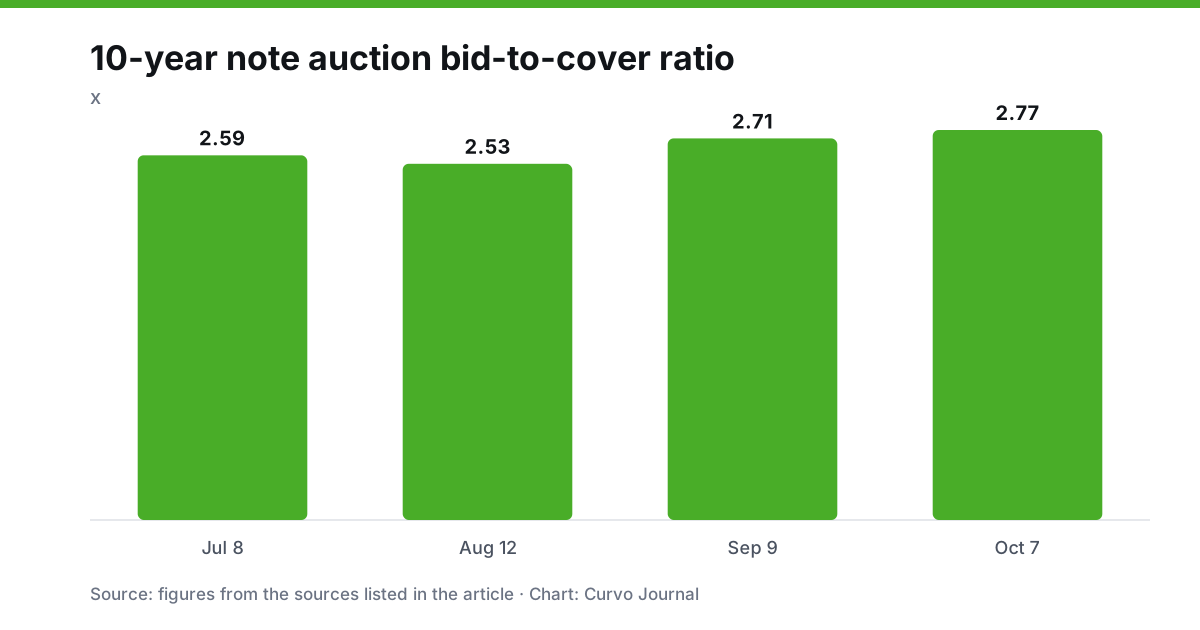
A bid-to-cover ratio of 2.30 is not exceptional for the 30-year, and it trailed the 2.40 recorded a day earlier, when the $42 billion 10-year note cleared at 4.468 percent. The longer the maturity, the more investors must be compensated for inflation and interest-rate uncertainty, and a slightly softer cover at the long end fits that pattern.
The distribution of awards, however, pointed to solid end-investor participation. When indirect bidders take two-thirds of a sale and dealers are left with a small share, it suggests that pension funds, insurers, asset managers and foreign buyers were willing to commit at the 5 percent level. Dealers, who must bid at every auction, are left holding less inventory to distribute afterward.
Why 5 percent matters for the bond market
The coupon is set to the nearest eighth of a point below the high yield, so a 5 percent coupon reflects where yields cleared rather than any decision by Treasury. Still, it is a meaningful threshold. A new 30-year bond paying 5 percent a year locks the government into that cost for three decades on this issue, and it signals how much term premium investors were demanding amid an energy-driven rise in inflation and uncertainty over the path of Federal Reserve policy.
The refunding statement a week earlier had said Treasury expected to keep coupon auction sizes steady for at least the next several quarters, so the higher yield did not reflect a surge in long-bond supply. It reflected price: investors asking for more compensation to hold duration.
The curve’s long end
For the yield curve, a long bond above 5 percent while the federal funds target range sat at 3.50 to 3.75 percent implies a steep spread between the policy rate and long-term yields, on the order of 130 basis points or more measured against the top of the range. That steepness reflects expectations that rates would stay elevated, plus a premium for the risk that inflation proves more persistent than forecast.
What to watch
The new bond will be reopened in June and July under Treasury’s regular schedule. Those sales will show whether demand at or above 5 percent holds as more supply comes to market. The 20-year bond auction later in May, and the Fed’s June projections, will also shape how much compensation investors demand at the long end.
Prepared with AI assistance from public sources and reviewed under our editorial policy. Not investment advice.