Bessent's 'House' Remark Meets a 5.3% 10-Year Treasury Yield
Treasury Secretary Bessent said he was 'the house' on Sept. 8; a month later the 30-year yield hit 5.70% and the 10-year 5.32%, the highest since 2002.
WASHINGTON — On September 8, Treasury Secretary Scott Bessent was quoted as telling markets, “I am the house now. Bet against me if you want.” A month later, long-term borrowing costs sit at their highest levels in more than two decades, and the 10-year Treasury yield has risen about half a percentage point since he spoke.
Key takeaways
- The 30-year yield reached 5.70 percent on October 7, the highest since 5.76 percent on June 6, 2002, according to analysis by Mike Shedlock.
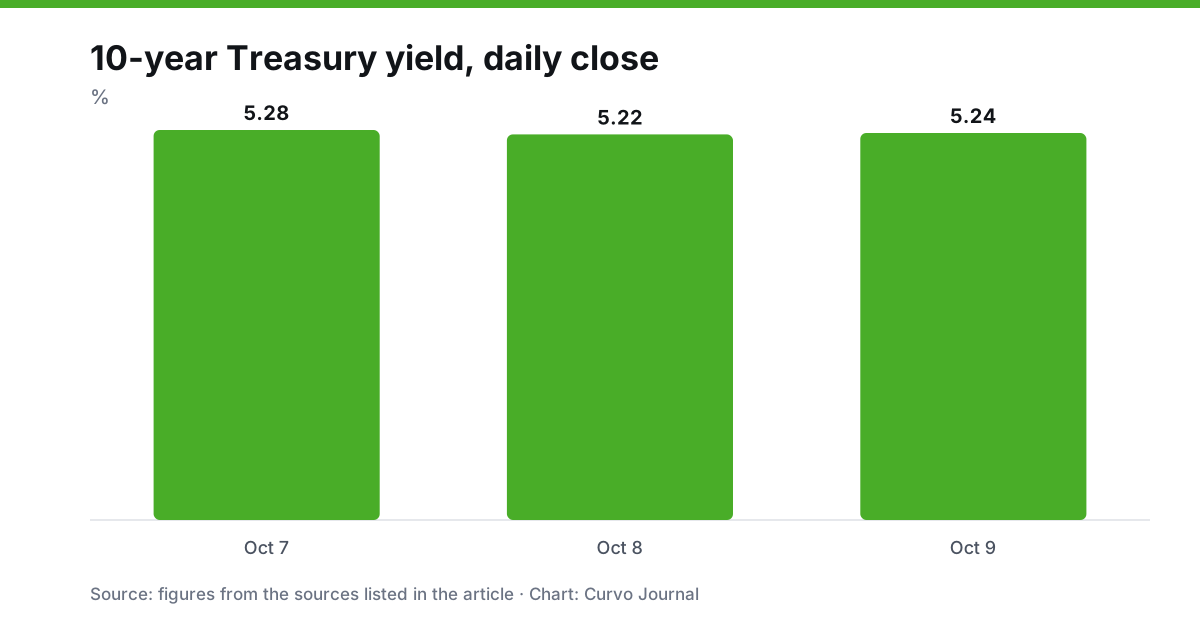
- The 10-year hit 5.32 percent, the highest since 5.36 percent on April 2, 2002.
- Since September 8 the 30-year is up 45 basis points and the 10-year 52 basis points, from 5.25 percent and 4.80 percent.
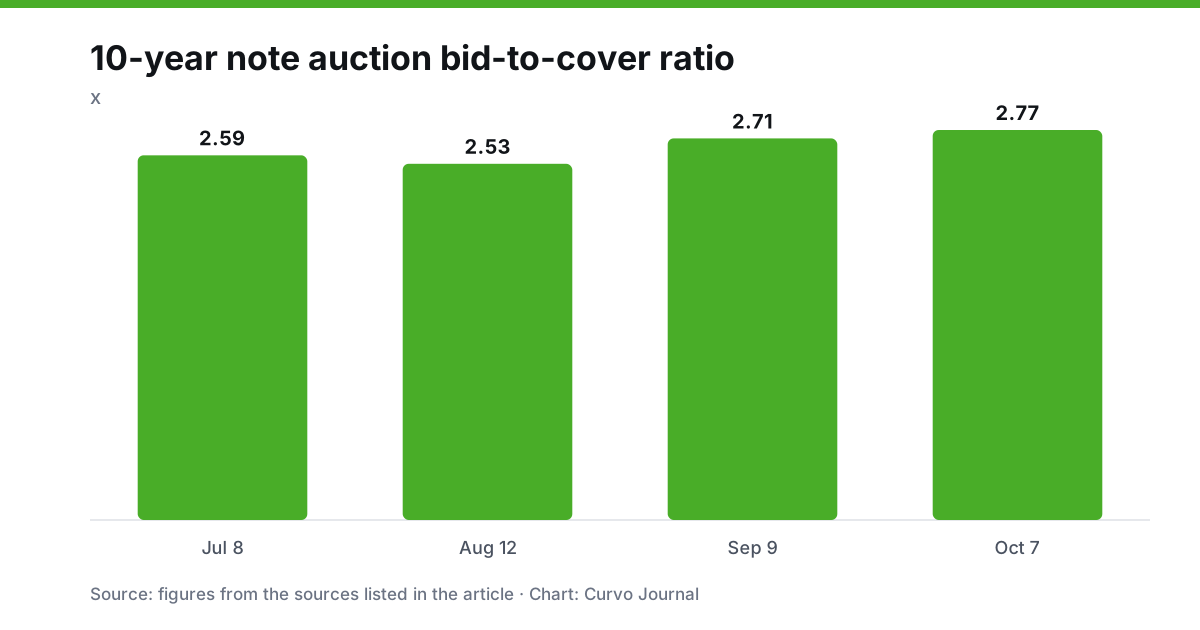
- A $39 billion 10-year auction on Wednesday cleared at 5.300 percent with a bid-to-cover ratio of 2.77.
The remark and the move
Shedlock, writing for Investing.com, set Bessent’s comment against the subsequent moves in the bond market. On September 8 the 30-year yield stood at 5.25 percent and the 10-year at 4.80 percent. By Wednesday they were 5.70 percent and 5.32 percent, increases of 45 and 52 basis points. Shedlock also framed the question of whether Bessent regrets the remark in a mock exchange, attributing a “No” to him and dismissing it.
The yield levels are those cited in Shedlock’s analysis; the official auction result below is the cleaner marker of where the market cleared.
How the auction went
The jump in borrowing costs coincided with a closely watched supply test. TreasuryDirect shows that the $39 billion reopening of the 10-year note drew $107.7 billion of competitive bids and cleared at a high yield of 5.300 percent. The bid-to-cover ratio of 2.77 was higher than at the previous three 10-year sales (2.59 in July, 2.53 in August and 2.71 in September), and indirect bidders took about 80 percent of the accepted competitive bids, with direct bidders around 17 percent.
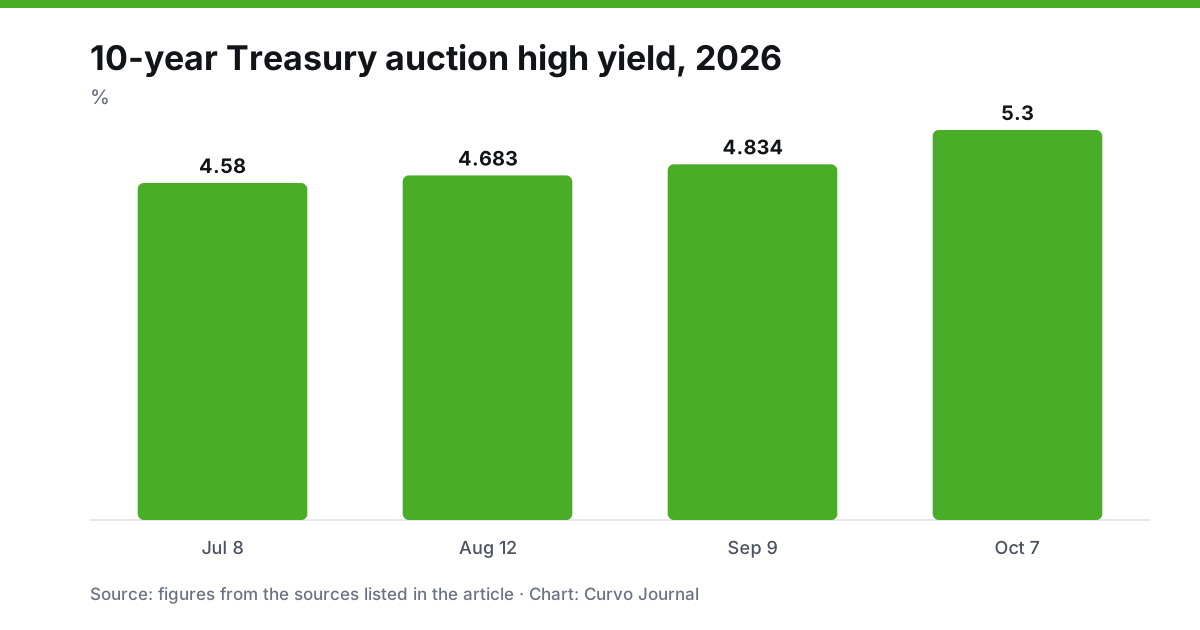
Strong demand at a higher yield is the pattern bond investors look for: buyers appeared once the price was attractive. The clearing yield itself, though, was 47 basis points above September’s 4.834 percent, a measure of how far the market has repriced in a month.
Fed minutes add context
The Federal Reserve released minutes of its September 15-16 meeting the same afternoon. They show all participants supported the quarter-point hike to 3-3/4 to 4 percent, and most expected another increase by year-end, subject to data. Several participants viewed policy as not restrictive or only mildly restrictive. The minutes say nominal yields rose about 35 basis points across the 2- to 10-year segment, with inflation compensation driving most of the move at shorter maturities and real rates at longer ones. The Desk also paused reserve management purchases of Treasury bills, with the pace to be reviewed monthly.
What a month of yield moves means
Measured against the September 9 auction, the trajectory is visible in official data as well as in intraday quotes. That sale of the 10-year reopening cleared at 4.834 percent. Wednesday’s cleared at 5.300 percent. The July and August 10-year sales cleared at 4.580 percent and 4.683 percent, so the yield demanded at successive auctions has climbed by 72 basis points since July, with the largest step coming in the latest month.
A rise in borrowing costs of that size raises the government’s interest expense on new issuance. It also resets the baseline for corporate and mortgage borrowers, who price off the 10-year. Shedlock’s point is that a public statement of confidence did not slow the repricing; whether that reflects policy, inflation or supply is a separate argument that the data above does not settle.
What to watch
Thursday brings a $22 billion reopening of the 30-year bond, the other long-end test of the week. September consumer price data, due later this month, will show whether the inflation pressure the Fed describes is easing.
Prepared with AI assistance from public sources and reviewed under our editorial policy. Not investment advice.